

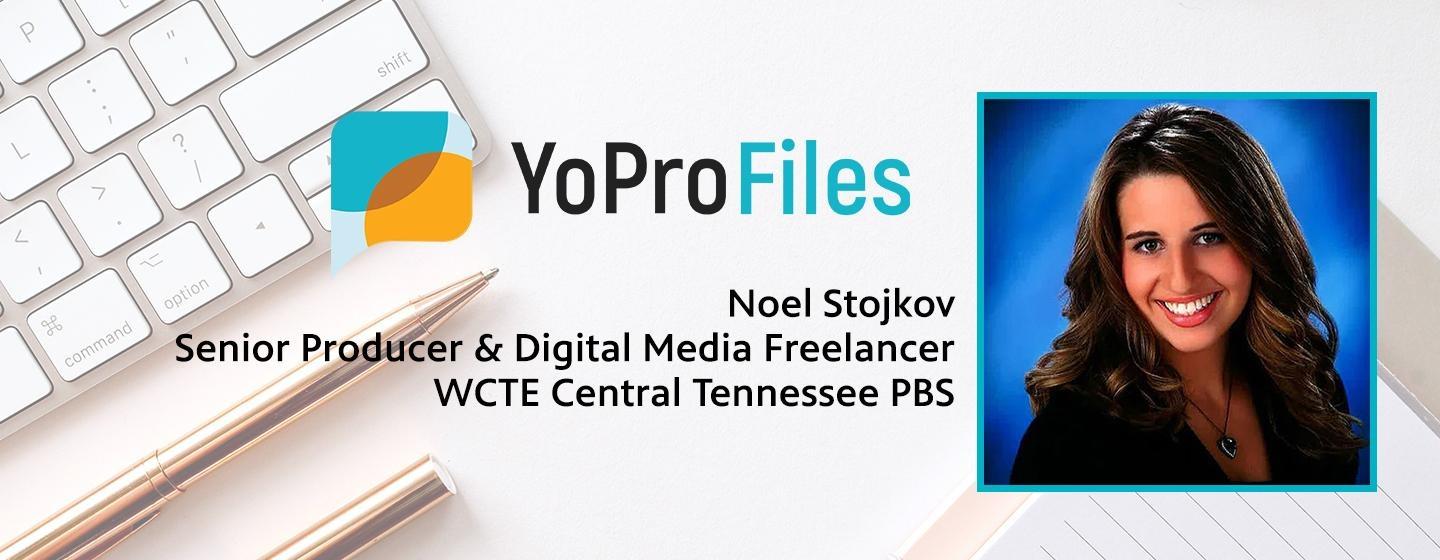
Hi all! My name is Noel Stojkov, and I’m the Senior Producer and Digital Media Freelancer at WCTE Central Tennessee PBS.
How did I get my start?
My earliest memories are of me dancing in front of the television along with my Sesame Street pals. From there, I swiped my parents’ camera and was mesmerized by how this little black box allowed me to create inspiration. After learning the magic effects of editing, I decided to study film and video at Grand Valley State University. PBS President and CEO Paula Kerger was the commencement speaker at my graduation, and I knew I was predestined for a career in video and media!
What was my first television broadcasting job?
Most of us can remember the excitement of our first “real” job offer. I was ecstatic when I got my big break at WGVU in Michigan! Not only was I fortunate to receive an actual paycheck soon after, but I was also assigned to co-produce and market a new show called Mutually Inclusive. Eventually, my team received an Emmy nomination for the documentary We the 7th. The best part of my WGVU duties was the day-to-day collaboration and the pure joy in producing exciting and personal stories; you know, the ones that serve the PBS mission. Gathering at the local pub on Fridays after our live show for a family meal also makes the list of enjoyable memories I’ve had while working for WGVU.
I left public broadcasting for a few years to try a career in news broadcasting only to realize my passion for video production is directly related to public broadcasting. It was a no-brainer for me to return to PBS when I received a call from a recruiter for WCTE.
What’s new and exciting at WTCE PBS?
I'm so excited to share that President and CEO Becky Magura and I are moving our digital-first project into production, which includes digital shorts, social media exclusive videos, and livestreaming content for our viewers. We have a station Digital Immersion group that meets every week to come up with new ideas, and we are working on ideas for digital shorts, like the American Portrait local submissions, as well as social
media exclusive videos. We’re also working on getting the behind-the-scenes aspect of production up and running so any live programming we have can be livestreamed in addition to being broadcast. WCTE is also working on a few different podcast projects, including one that airs on a non-NPR licensed radio station!
We have collaborated with other departments to figure out what they need to help with this digital-first idea and developed our local show media kits, which have been lifesavers! These kits have everything in one place for marketing, social media, external users, and the traffic team, allowing for more effective communication on all fronts so we can better serve our audience. Our public television station is an essential lifeline for many of our rural viewers and this work makes it possible to serve all of our communities through the PBS mission.
My boss, Director of Content and Digital Media Brent Clark, is highly supportive and encourages me to put myself out there. Recently, I found myself hosting and sitting on panels during our film festival for teens thanks to his push. Our station is always looking for ways to offer diverse perspectives and create an experience of equity and inclusion for all viewers. Some of the ways we’re making sure we become a more inclusive station are having a diversity committee, teaming up with well-known community groups who excel in diversity and inclusion and look for stories in the community that has a diverse perspective.
Our diversity committee meets up every quarter to talk about how to bring more diversity to our station and comes up with the steps to work towards becoming more diverse. Brent Clark and Director of Education and Engagement Cephas Ablawa are our staff liaisons leading this committee. They listen to the ideas and work to put the best ideas into action.
We also team up with well-known diversity community groups to help us find stories that our community would be invested in. While teaming up with these groups WCTE PBS works to create a partnership that is beneficial for all.
What challenges do I see as a producer?
Jumping into the senior producer and digital media role with less than five years out of college has come with its challenges. One of the more significant challenges has been building my relationship with a rural audience. My last transition from urban to suburban has helped me gain some perspective, but each audience is unique and it takes time to learn their individual interests and needs. Thankfully, the collaboration between our station and the local community has been very welcoming and has helped me understand how best to serve this community.
Another challenge is that, as a small station, we have teams of only two people who know production and post-production so there’s always the challenge of balancing primary priorities with meeting new directions with such a small staff. It’s a balancing act for sure, but we continue to improve our workflow, and we are now expanding our operations to produce both digital and broadcast content.
Lastly, as a young professional, I haven’t yet learned the art of saying no. I see the value in everything we are trying to accomplish, but I also believe we would have a more effective outcome if we kept a narrower focus. I often find myself stretching, trying to conquer everything, so this is an area where I’m working to improve.
What wisdom have I gained?
I am consistently looking for opportunities to move my career forward. An opportunity I’m very grateful for is my monthly meetings with our President and CEO Becky Magura. Becky has excellent wisdom about broadcasting and a wide lens of experience as a female executive leader. She is always willing to take the extra time to share her expertise and I’ve learned a lot from her that I plan to carry forward when mentoring others.
What advice would I give to my younger self or someone starting in public media?
It’s okay to make a mistake, and you will make mistakes! Starting off in editing during my college years, I automatically went straight into a fix-it mode on my own when an error occurred and I’ve since learned this doesn’t work in broadcasting because it is a team sport. Fortunately, it’s easier to work through a problem as a team and everyone in the PBS community wants to see you succeed! There will always be someone in your corner to help you see a better direction.
Secondly: ask the question! The most insightful interviews I’ve had are with colleagues. Shadow in cross-function departments to help you gain a deeper understanding of the bigger picture. These interactions can only make you stronger in your role.
PBS has so many stations and so many communities inside its network. Whether it’s going to conferences, being a part of YoPro, participating in digital immersion, or some other PBS opportunity, you will find the PBS tribe that fits you. PBS colleagues are always happy to connect, chat, and discuss ideas so don’t hesitate to reach out! The PBS community has an opportunity waiting for you!
What will I take on next?
I’m working through my MBA at Tennessee Tech. The marketing courses are pretty interesting, but I’m excited to have more exposure to finance and strategic planning as well.
I’m not quite sure what the future has in store for me, but I do know that I’ll be part of the public media community for years to come. That is predestined.
Looking to connect with Noel Stojkov to learn more about her experience or get more advice? Email her at: noelstojkov@gmail.com.